Free 52-page guide for New Zealand landlords
New notice periods, a pet bond, Healthy Homes deadlines and new meth levels. The Ray White Landlord Information Guide covers the lot in plain English.
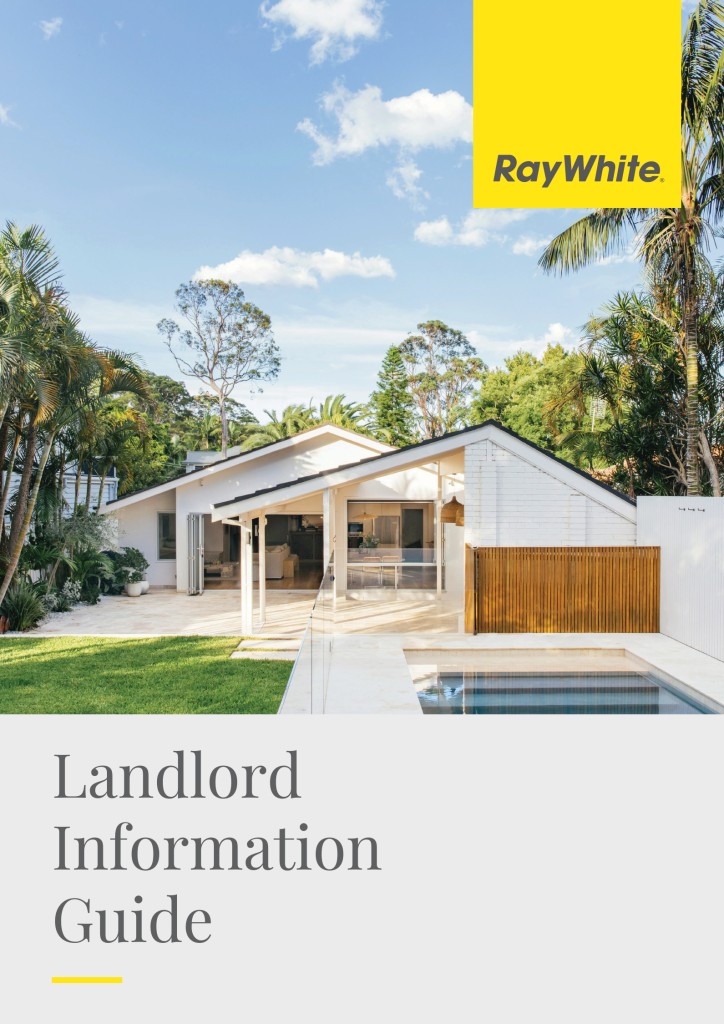
What the law says, and what good practice looks like, for each part of a tenancy. Checked against tenancy.govt.nz on 16 October 2026.
The law. Must be in writing, with a copy given to the tenant before the tenancy starts. A new agreement must also include a signed healthy homes compliance statement, an insulation statement and an insurance statement.
Good practice. Use the Tenancy Services template or agreement builder, and attach the initial property inspection report with dated photos.
The law. A general bond can be up to 4 weeks' rent, and since 1 December 2025 a separate pet bond of up to 2 weeks' rent. In most cases, a bond paid to you must be lodged with Tenancy Services within 23 working days of receiving it.
Good practice. Lodge it online as soon as it is paid, rather than counting down the 23 days.
The law. All private rentals have had to meet the heating, insulation, ventilation, moisture ingress and drainage, and draught stopping standards since 1 July 2025. Penalties can reach $7,200.
Good practice. Keep the assessment, invoices and photos that show how each standard is met. You have to keep compliance records anyway.
The law. Working alarms within 3 metres of each bedroom door or in every room where someone sleeps, and on every level. New alarms must be photoelectric, with a battery life of at least 8 years or hard-wired, and must work at the start of every tenancy.
Good practice. Test them at every inspection and note the expiry dates on the report.
The law. At least 48 hours' notice for an inspection, no more than once every 4 weeks, between 8am and 7pm. At least 24 hours' notice to enter for repairs.
Good practice. Take the initial inspection report to every inspection and photograph anything you raise, keeping the tenant's belongings out of shot.
The law. Since 16 April 2026, a property is contaminated above 15 µg/100cm² and uninhabitable above 30 µg/100cm². Testing during a tenancy needs 48 hours' notice, and the results go to the tenants within 7 days of you receiving them.
Good practice. Keep every test report with the property's records, so you can show its condition from one tenancy to the next.
The law. Not within 12 months of the tenancy starting or of the last increase, and during a fixed term only if the agreement allows it. At least 60 days' written notice. The law does not cap the amount.
Good practice. Check the Tenancy Services market rent data first, and keep a copy of the notice you give.
The law. Since 30 January 2025, a periodic tenancy can end with 90 days' notice and no reason, or 42 days for set reasons such as the owner moving in or a sale that needs vacant possession. Tenants give 21 days. For fixed terms ending on or after 1 May 2025, the tenancy becomes periodic unless either side gives notice between 90 and 21 days before it ends, or both agree otherwise.
Good practice. Inspect a few weeks before the final day, so the tenant has time to put things right.
The law. Keep inspection reports, agreement changes, repair and Healthy Homes records, advertisements, and all notices and messages with tenants, during the tenancy and for 12 months after it ends.
Good practice. Keep one folder per property, with every document dated.
Not sure your rental is compliant? Tick these off in order. If you find a gap, fix it and keep the proof.
Found a gap? Ask us for a free rental appraisal and we will look over it with you.
Nine chapters, 52 pages. Page numbers are from the guide's own contents page.
Preparing the property and yourself before the first tenant moves in.
How a tenancy runs, from setting the rent and finding tenants to the end of the tenancy.
The 2019, 2020 and 2024 amendments, and what they mean for landlords.
Heating, insulation, ventilation, moisture and draughts: what each standard asks of a rental.
Where alarms must go, which types are allowed, and the landlord's responsibilities.
Contamination risk, testing between tenancies and what insurers now expect.
Your duties under the Health and Safety at Work Act, including repairs, maintenance and viewings.
Your legal responsibilities as a landlord, in one place.
Plain answers to the questions landlords ask most.
Download it now and keep it for when you need it.
There are three ways to run a rental. None is wrong; it comes down to your time, how close you live and how comfortable you are with the rules.

You find and vet the tenants, collect the rent, run the inspections, organise repairs and keep up with the law. It suits landlords with time, nearby and comfortable with the paperwork.
Keep the parts you enjoy and pass on the rest. Ray White Choice lets you pick the services you want, such as finding a tenant or running inspections.
A property manager handles the tenancy from start to finish: rent, tenants, inspections, repairs, compliance and the records, while you keep the decisions that matter.
Find out what your property should rent for, from a local West Auckland property manager. Free, with no obligation to list with us.
Meet the people who look after your investment.